

Introduction
The quality of PP woven fabric plays a critical role in the strength, appearance, and performance of finished packaging products. For buyers of woven polypropylene bags used in fertilizer, feed, cement, and industrial packaging, understanding the manufacturing process can help ensure better sourcing decisions.
Among the key factors affecting fabric quality is the weaving technology used by the manufacturer. Today, the two most common methods are water jet loom and circular loom.
This article explores the differences between these technologies and how they impact fabric quality, production efficiency, and packaging performance.
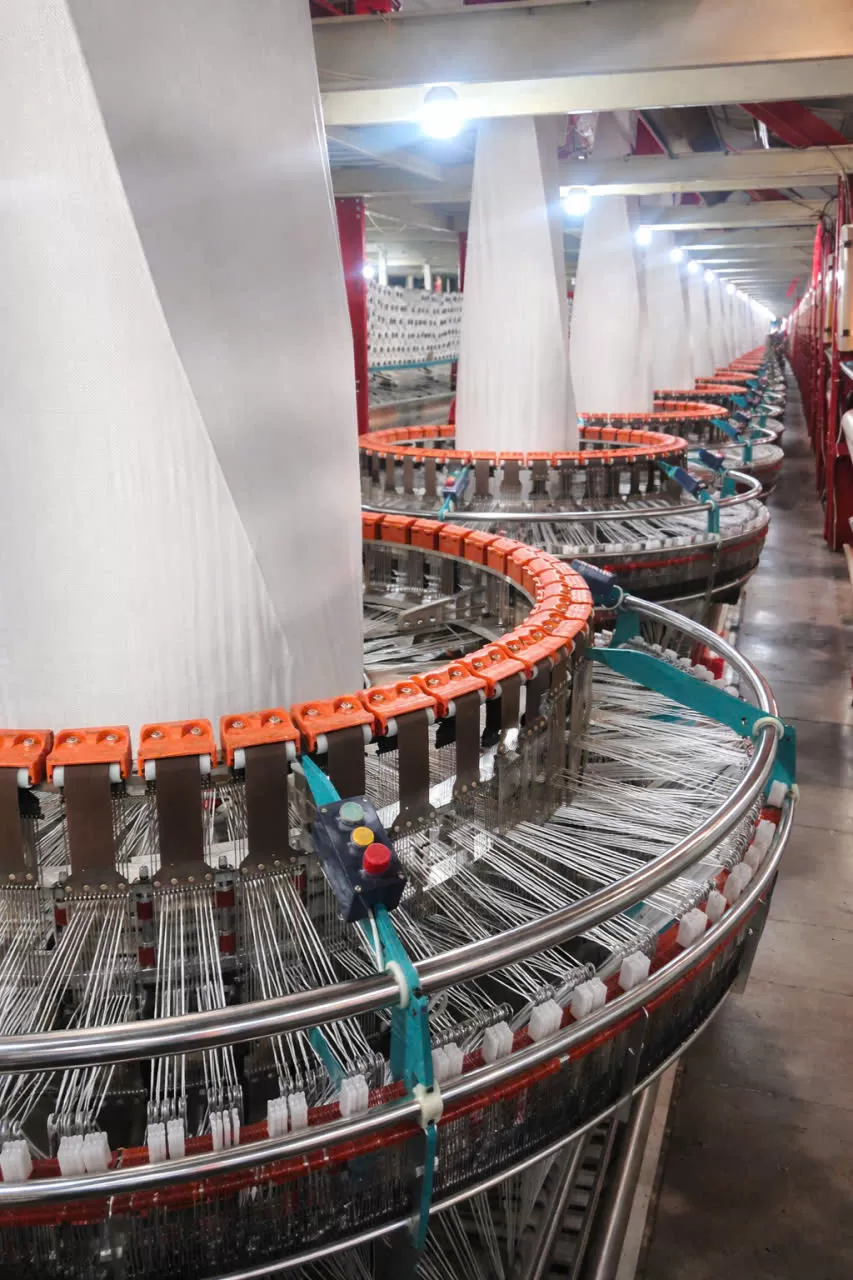
What Is a Circular Loom?
A circular loom is the traditional technology used to produce tubular PP woven fabric. Polypropylene tapes are woven in a continuous circular pattern, creating seamless fabric without side seams.
Key Features
- Produces tubular woven fabric
- No side seam required
- Ideal for fertilizer, rice, flour, and cement bags
- Proven, cost-effective technology
- Widely used across global packaging markets
Its reliability and versatility make the circular loom a standard choice for many PP woven bag manufacturers.
What Is a Water Jet Loom?
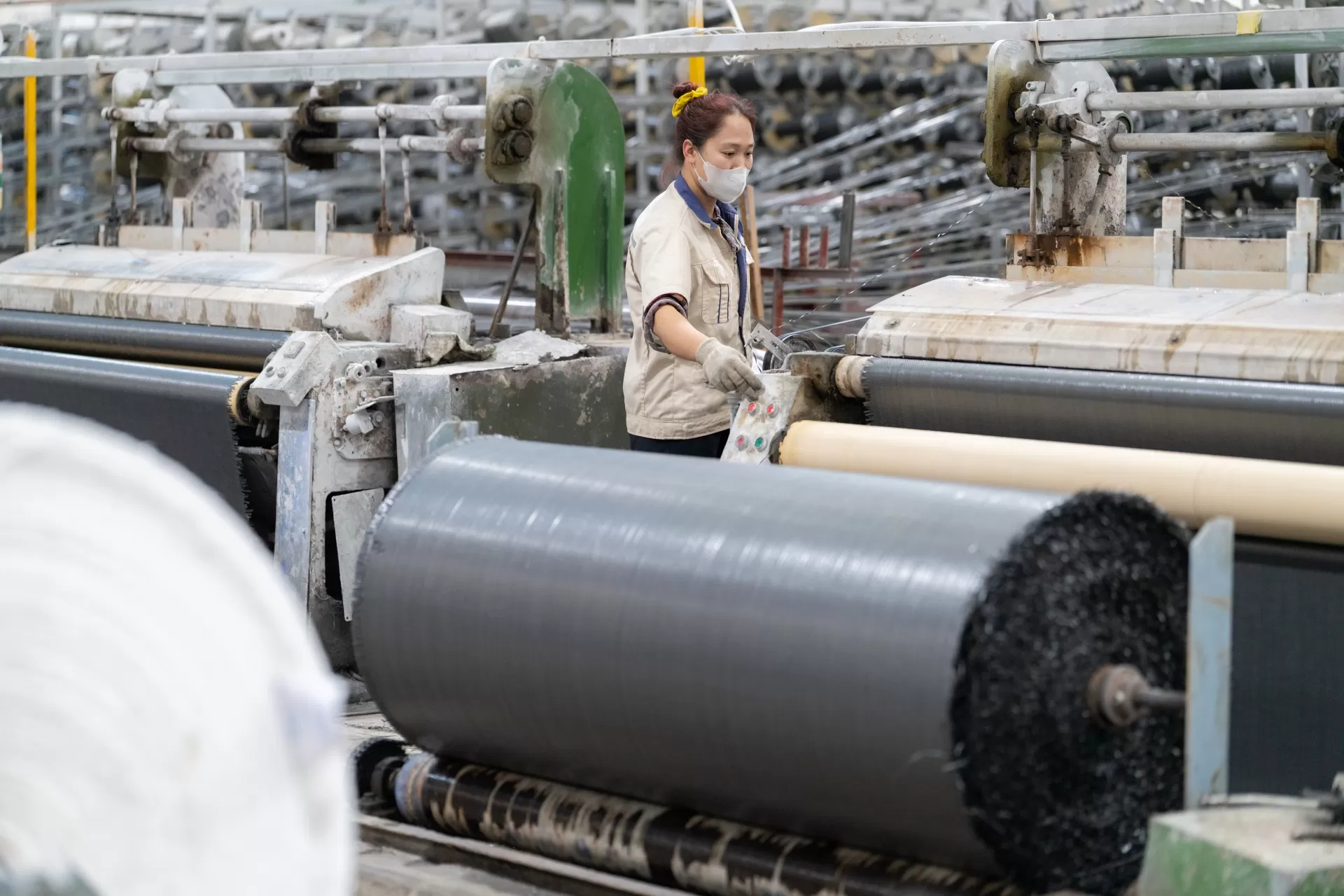
A water jet loom uses a high-pressure water stream to insert weft tapes during weaving, producing flat woven fabric with superior uniformity.
Key Features
- Produces flat woven fabric
- Smooth and uniform surface
- Higher weaving speed
- Better print and lamination performance
- Ideal for premium packaging applications
Water jet looms are increasingly used for high-quality BOPP laminated bags, pet food bags, animal feed packaging, and retail products.
Why Does Weaving Technology Matter?
When sourcing PP woven packaging, buyers often focus on price, strength, print quality, and lead time. However, the weaving technology behind the fabric directly affects all of these factors.
The weaving method can influence:
- Fabric consistency and strength
- Printing and lamination quality
- Dimensional accuracy
- Packaging appearance
- Material efficiency
For brands that value product presentation and packaging performance, selecting the right weaving technology can make a significant difference.
Water Jet Loom vs Circular Loom: Side-by-Side Comparison
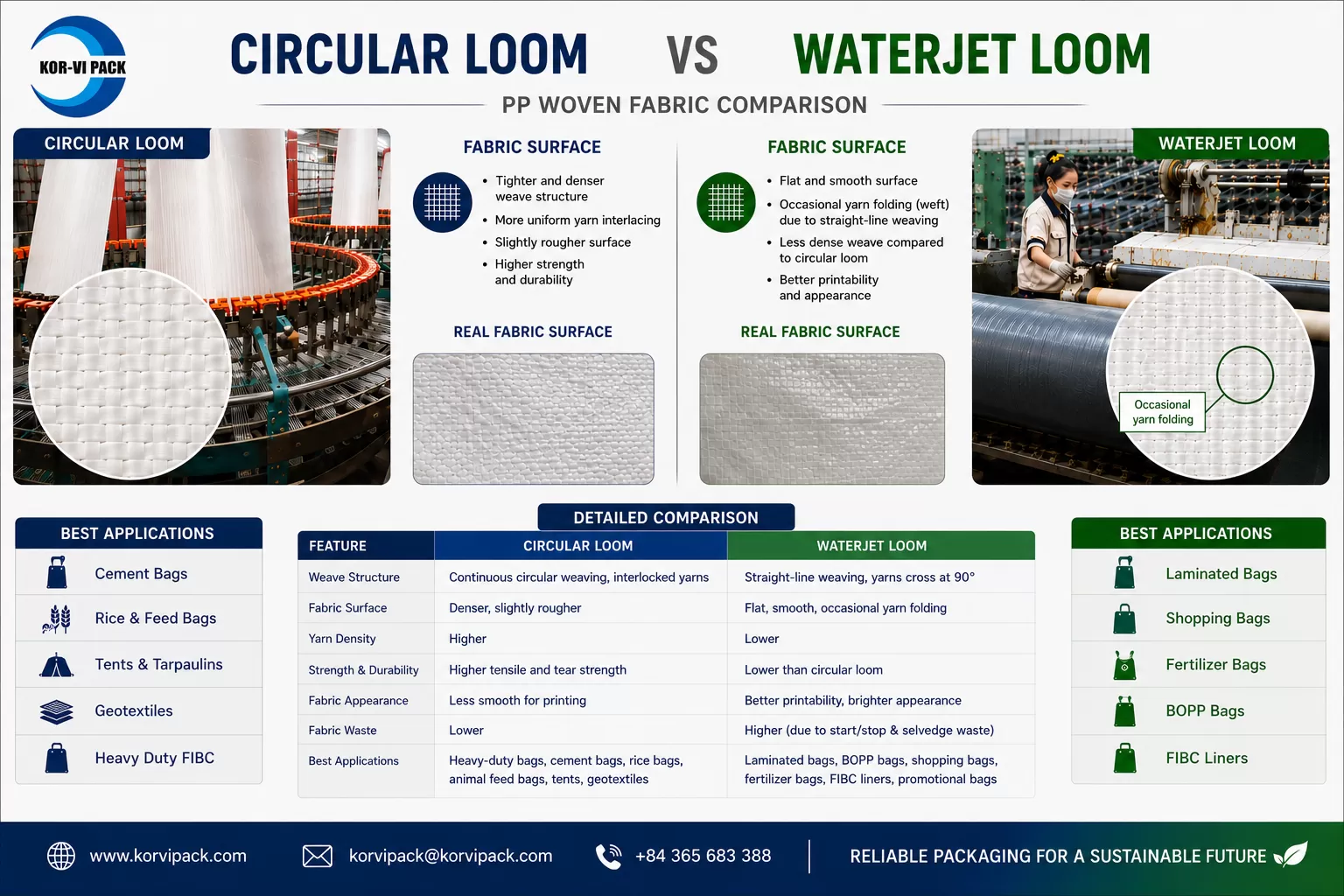
Conclusion
Both water jet loom and circular loom technologies play important roles in the production of PP woven fabric and woven polypropylene bags.
Circular looms continue to offer a proven, cost-effective solution for many industrial packaging applications. Meanwhile, water jet loom technology provides enhanced fabric consistency, improved appearance, and advantages for premium printed packaging.
For procurement managers, packaging engineers, and brand owners, the right choice depends on the specific requirements of the end product, branding objectives, and performance expectations.
Rather than focusing solely on price, buyers should evaluate weaving technology, quality control systems, production capability, and supplier expertise. By understanding these factors, companies can make better sourcing decisions and ensure reliable packaging performance throughout their supply chain.
Contact Us
Looking for a reliable PP woven bag manufacturer with advanced weaving technology and extensive experience serving international markets?
Contact our packaging specialists today to discuss your project requirements, request samples, and explore the most suitable fabric solution for your application.